 |
Manitoba Trade and Export Growth Plan
Export Markets
Priority Markets and Strategic Opportunities
Manitoba's priority markets are jurisdictions where Manitoba companies already have traction and where diversification can deliver the greatest growth potential. Market selection is informed by export performance, sector alignment, market access under trade agreements, and practical connectivity to customers and supply chains.
Manitoba will continue to monitor evolving global trade dynamics, including shifts in demand, supply chain reconfiguration, and geopolitical developments, to identify specific regions for targeted trade efforts within priority markets. This includes identification of sub-markets or industry clusters where Manitoba companies are best positioned to succeed. The province will work closely with Global Affairs Canada to align these efforts with Canada's broader trade priorities, market intelligence and trade relationships.
The priority markets offering the strongest near-term opportunities for Manitoba exporters include:
United States (U.S.)
The U.S. will continue to be an important trading partner due to proximity and existing business relationships. Approximately 72 per cent of Manitoba's exports go to the U.S. Priority regions include Midwest for integrated agri-food and manufacturing supply chains, Central/South with major distribution and processing hubs for pharmaceuticals/life sciences and food manufacturing, and Mountain/West for niche ICT and professional services. Opportunities include agri-food (processed foods, proteins, grains/oilseeds), advanced manufacturing (heavy vehicles/equipment, components) and bioscience products. The Manitoba government will continue to build stronger relationships with key U.S. lawmakers and industry leaders through its permanent trade office in Washington, D.C.
Mexico
Mexico offers a strategic growth market under CUSMA, with opportunities tied to nearshoring and integrated North American supply chains. Geopolitical uncertainty has created opportunities for Manitoba to strengthen its economic and commercial relationship with Mexico. Mexico is Manitoba's fourth largest export market in 2025, with top exports including pork, canola oil, canola seed, legumes, frozen potatoes and wheat. Priority regions in Mexico include the North and Northeast manufacturing corridor (Nuevo León, Coahuila, and Tamaulipas) for industrial supply chains and logistics; the Bajío region (Guanajuato, Querétaro, and San Luis Potosí) for advanced manufacturing, aerospace and automotive-related supply chains; Western Mexico (Jalisco) for ICT and advanced manufacturing, and the Mexico City region for services, ICT and corporate procurement. Opportunities include agri-food, manufacturing inputs and equipment, and advanced technologies.
Europe
European Union (EU): The EU is one of Manitoba's largest trading partners, with strong alignment to Manitoba's strengths and preferential access under the Comprehensive Economic and Trade Agreement (CETA). Manitoba's domestic exports to the EU reported meaningful growth from $528M in 2024 to $830M in 2025. Spain, France, the Netherlands, Italy and Germany were the top export destinations in the EU, together accounting for 75 per cent of total exports to the region. Priority regions include the North Sea logistics/processing hubs (Netherlands/Belgium) to reach EU buyers through major ports and distribution networks, and Germany/France for industrial manufacturing markets for machinery, components and clean-tech solutions. Opportunities include wheat and other grains/oilseeds, ag machinery and equipment, pharmaceuticals and medicaments, and niche manufacturing.
United Kingdom (UK): Canada's historic relationship and economic ties with the UK make it an important priority market for targeted diversification and high-value partnerships, supported by continued preferential access under the Canada-UK Trade Continuity Agreement. Manitoba's domestic exports to the United Kingdom reached $193M in 2025, up from $170M in 2024. Manitoba's top exports were wheat, soybeans and electrical boards and panels, representing more than 50 per cent of total domestic exports. Opportunities include grains and oilseeds, electrical panels and industrial components, and ICT and services, including finance and insurance.
Indo-Pacific Region
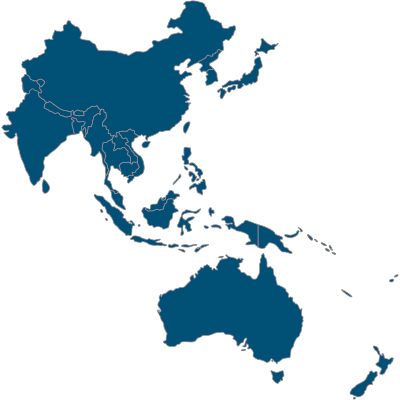
The Indo-Pacific is a high-growth diversification region due to rapid growth, large consumer markets, and an expanding middle class. Domestic exports to the Indo-Pacific grew from $3.71B to $3.72B in 2025. China, Japan, South Korea, Indonesia and Bangladesh were the top export markets, collectively representing 80 per cent of total exports to the region. Increased engagement in this region will help Manitoba diversify trade and export opportunities. Other emerging priority markets include Southeast Asia (Indonesia and Vietnam), where a growing middle class is driving demand for value-added products; Australia, for equipment and specialized services; and India, given the ongoing negotiations for a Comprehensive Economic Partnership Agreement (CEPA) between Canada and India, which are set to conclude by the end of 2026.
For more information about Manitoba's priority markets, visit: Manitoba Export Navigator Portal