Environmental
Current Status
2024
June 5, 2024: The Impact Assessment Agency of Canada (IAAC) released its Environmental Assessment Report (EAR) on the Lake Manitoba and Lake St. Martin Outlet Channels Project. It concludes that the Project is likely to cause significant adverse environmental effects on:
- Indigenous Peoples’ physical and cultural heritage, including from effects to aspects of intangible cultural heritage, such as sense of place, spiritual connection to the land, and intergenerational knowledge transfer;
- Indigenous Peoples' current use of lands and resources for traditional purposes, including from loss or alteration of access, effects to the availability and quality of resources, and effects to quality of experience; and
- Indigenous Peoples' sites or things of historical, archaeological, paleontological, or architectural significance, including from the loss of sites of importance and lack of mitigations for effects to sites outside the Project's footprint.
- Read the Environmental Assessment Report (EAR)
The federal Minister of Environment and Climate Change must now refer the matter to the Governor-in-Council to determine whether the significant adverse environmental effects likely to be caused by the Project are justified under the circumstances pursuant to 52(4) of the Canadian Environmental Assessment Act, 2012. A final decision on the Project will be informed by all available and relevant scientific information and Indigenous knowledge provided by Indigenous Peoples involved in the environmental assessment of the Project.
September 27, 2024: MTI requested IAAC not to proceed with referring the review to the Governor-in Council at this time. The Manitoba government is currently working to reset relationships with Indigenous Nations and potentially affected communities involved in the Project. This pause will allow additional time to work through concerns raised by Indigenous communities.
November 15, 2024: IAAC agreed to wait to refer the Project to Governor-in-Council for decision until the Manitoba government provides further notice.
What is Manitoba Transportation and Infrastructure doing to address environmental concerns related to the Project?
Flood mitigation and protection for communities remains a priority for MTI. That is why the Manitoba government remains committed to listening to Indigenous Nations and stakeholders in a way that addresses their concerns while developing robust mitigation, monitoring, measures potential environmental effects of the Project.
The Manitoba government recognizes that Indigenous Nations living near the Project area have a special connection to the land and water. That is why MTI is working to reduce Project-related effects so that Indigenous Nations will experience minimal disruption to their ways of life around the Project area.
Environmental monitoring plans have also been developed for each stage of the Project, and MTI continues to collect baseline data through fieldwork activities around the Project site to inform mitigation and response measures.
In 2024, MTI continued to advance the following measures:
Multiple federal and provincial environmental assessment processes. These approvals include the IAAC Decision Statement, Manitoba Environment Act License, Transport Canada Approvals, and Fisheries Act Authorization.
Environmental Management Program Planning (EMPs) to mitigate potential environmental impacts of the Project on Indigenous Nations and surrounding communities' ways of life.
Environmental fieldwork monitoring around the Project site to collect pre-Project baseline data
Dedicated heritage resource mitigation planning meetings to address key cultural and heritage resource concerns of potentially affected communities.
Discussions with IAAC and Environment and Climate Change Canada to advance Species-at-Risk Permits and meet Migratory Bird Regulations.
Ongoing Environmental Activities:
Environmental Assessment Process
Environmental assessment is a process to predict environmental effects of proposed projects before they are carried out.
As defined on the Impact Assessment Agency of Canada website, an environmental assessment:
- identifies potential adverse environmental effects
- proposes measures to mitigate adverse environmental effects
- predicts whether there will be significant adverse environmental effects, after mitigation measures are implemented
- includes a follow-up program to verify the accuracy of the environmental assessment and the effectiveness of the mitigation measures
Environmental Impact Statement (EIS)
The EIS describes the Project, assesses potential effects, and identifies how these effects will be addressed. The EIS is available online at the following websites:
The following summaries of Valued Components considered in the EIS are:
|
Environmental Management Program
The environmental management and monitoring plans for the proposed Lake Manitoba and Lake St. Martin Outlet Channels Project measure and monitor the activities and potential impacts of the Project. They include what MTI will be doing during both the construction and operation phases of the Project. MTI shared the previous drafts of these plans in three sets over November and December of 2020. The intent was to provide opportunities for review and feedback on the adequacy, contents, clarity, and methodology of each plan.
Due to the effects of the COVID-19 pandemic on in-person meeting requirements, some outreach had to be conducted through virtual meetings, a virtual engagement portal, EngageMB (November 16, 2020 to January 14, 2021), virtual open houses, and website updates. We also provided printed or electronic (e-mail) copies where needed.
While the virtual portal is now closed, the previous versions of the plans are still available.
The documents below are the current versions of Manitoba Transportation and Infrastructure’s environmental management and monitoring plans that have been developed with feedback from Indigenous Nations as of January 2023.
- Access Management Plan v.2
- Agricultural Biosecurity Management Plan v.2
- Aquatic Effects Monitoring Plan v.2
- Complaints Resolution Process v.2
- Construction Environmental Management Plan v.2
- Dust Control Plan v.2
- Eastern Whip-poor-will Habitat Plan v.2
- Environmental Management Plan Framework v.2
- Environmental Protection Plan v.2
- Groundwater Management Plan v.2
- Heritage Resources Protection Plan v.2
- Ice Management Plan v.2
- Operational Environmental Management Plan v.2
- Project Environmental Requirements v.2
- Quarry Management Plan v.2
- Red Headed Woodpecker Mitigation Plan v.2
- Revegetation Management Plan v.2
- Sediment Management Plan v.2
- Site Decommissioning Plan v.2
- Surface Water Management Plan v.2
- Wetland Compensation Plan v.2
- Wetland Monitoring Plan v.2
- Wildlife Monitoring Plan v.2
Archived Environmental Management Plans
Environmental Approvals
Federal and provincial environmental approvals are required for the Lake Manitoba and Lake St. Martin outlet channel project.
Environmental approvals are granted from government agencies that are the responsible authority for The Environment Act, The Canadian Environmental Assessment Act, and The Fisheries Act.
These include:
- Manitoba Environment and Climate Change – Environmental Approvals Branch
- Impact Assessment Agency of Canada (IAAC)
- Fisheries and Oceans Canada (DFO)
Manitoba environmental approvals
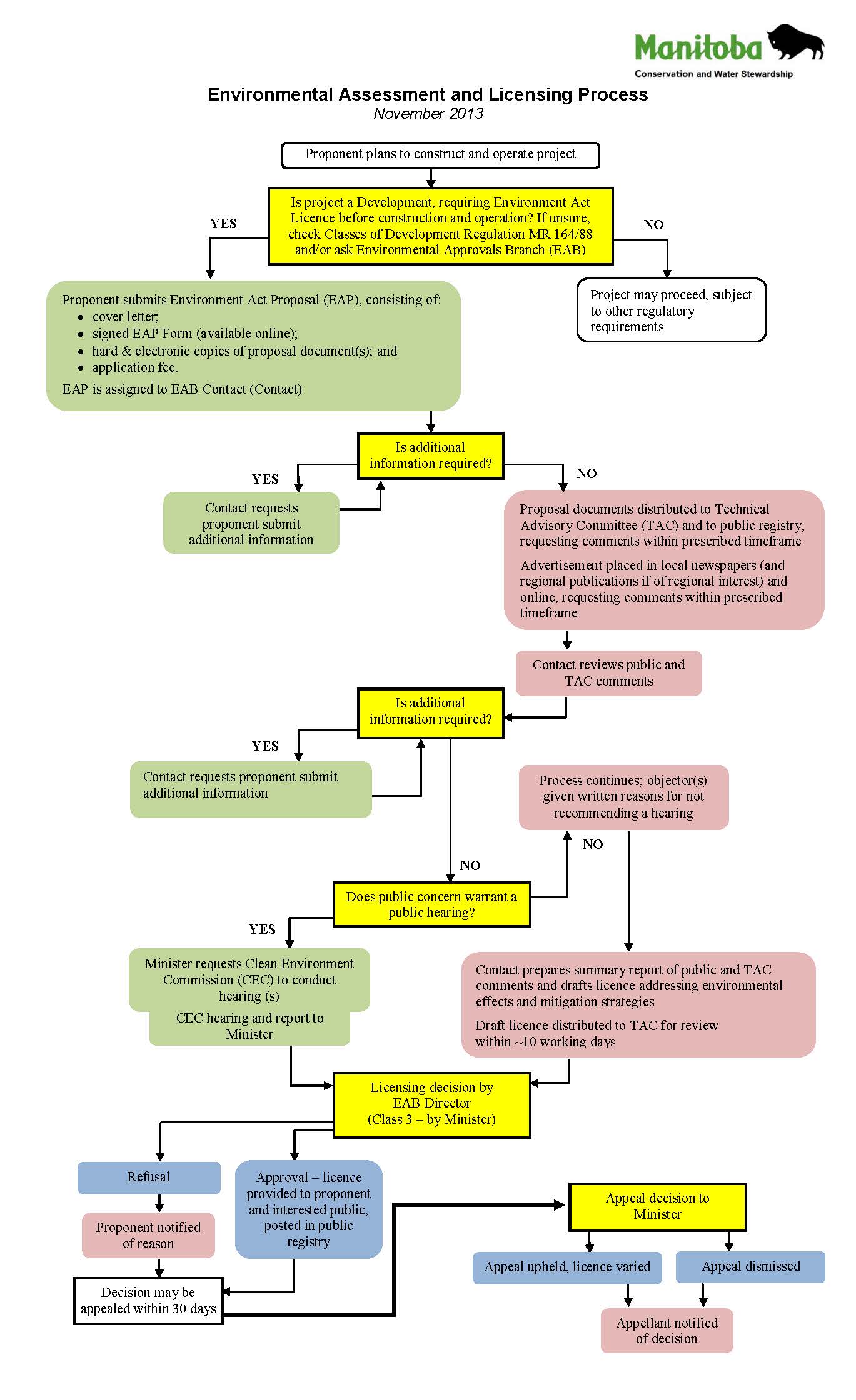
Manitoba Conservation and Climate Environmental Approvals Branch is responsible for administering the requirements of The Environment Act.
The Environment Act outlines the environmental assessment and licensing process for developments in Manitoba that may have potential for environmental and / or human health effects. The process exists to ensure environmental and human health protection, encourages early consultation, allow for full public participation, and ensure economic development occurs in an environmentally responsible manner.
External links
Impact Assessment Agency of Canada (IAAC)
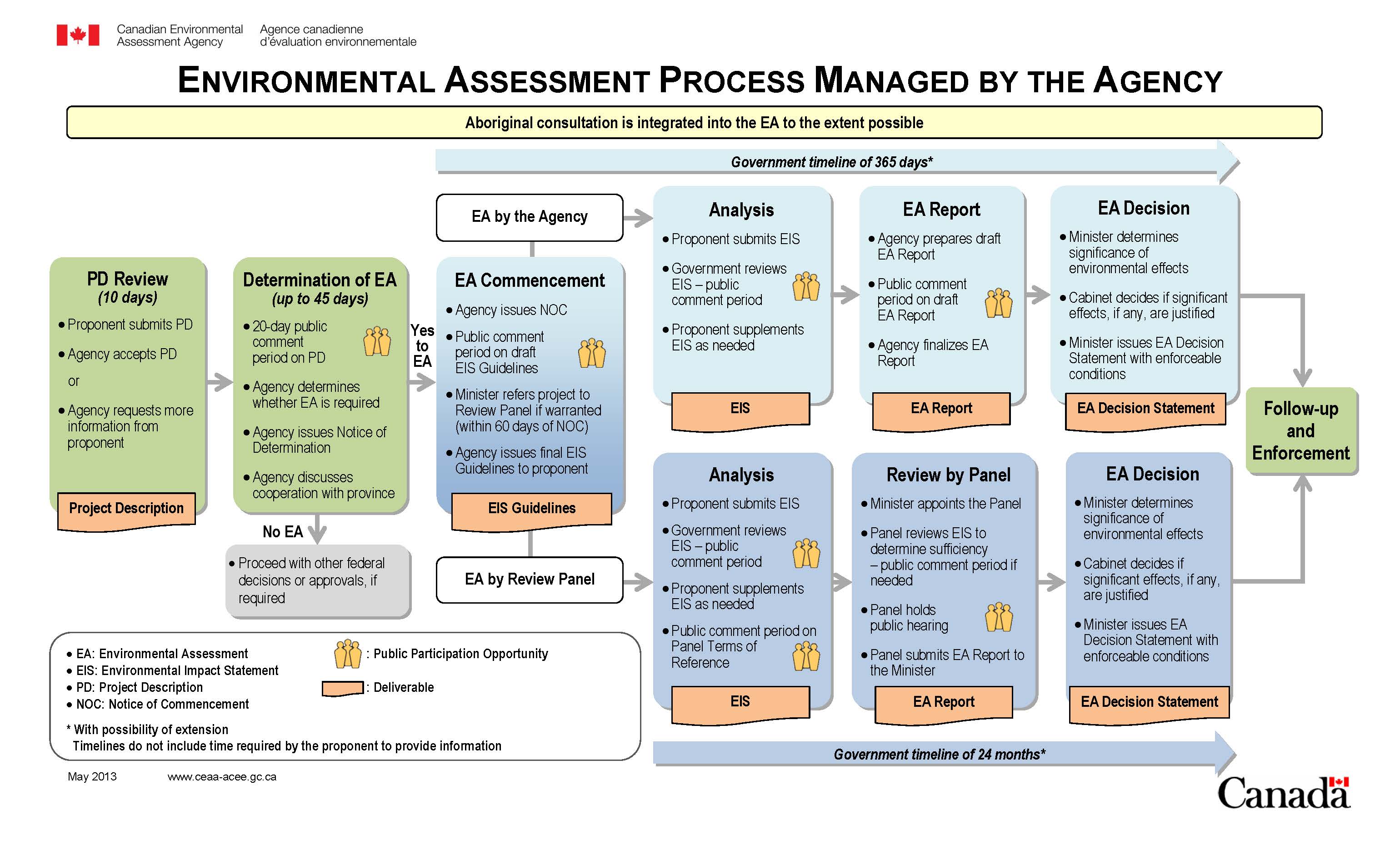
IAAC ensures that the environmental assessment of the Lake Manitoba and Lake St. Martin Outlet Channels Project is conducted in accordance with the Canadian Environmental Assessment Act, 2012 (CEAA 2012).
The purpose of CEAA 2012 is to protect components of the environment that are within federal legislative authority from significant adverse environmental effects caused by a designated project.
CEAA 2012 applies to project described in the Regulations Designating Physical Activities and to projects designated by the Minister of Environment and Climate Change Canada.
CEAA 2012 was replaced with the Impact Assessment Act in 2019. However, CEAA 2012 continues to apply to the Project because the Project was initiated when the legislation was still in force.
Required approvals:
- IAAC decision statement for the Lake Manitoba and Lake St. Martin Outlet Channel Project
Public participation is encouraged at various stages during the environmental assessment process. Use the links below for some of the public participation opportunities that were included as part of the process.
External links
Fisheries and Oceans Canada (DFO)
The Authorization includes terms and conditions the proponent must follow to avoid, mitigate, and offset project impacts to fish and fish habitat under the Fisheries Act.