Traffic Safety Measures
New traffic safety measures are now in effect to enhance protection for everyone travelling on Manitoba roads, including cyclists, roadside assistance operators and winter maintenance crews.
These measures establish clear expectations for motorists when approaching cyclists and snow‑clearing equipment. They also allow roadside assistance operators to place cones and other traffic‑control devices to create a safe working zone while they perform duties near moving traffic.
Approaching and passing winter maintenance vehicles
In the winter, snowplow operators work to keep roads clear of snow and ice, ensuring they are safe for travel. Under Manitoba’s Highway Traffic Act, the operators of snowplows and other winter maintenance vehicles, are allowed to forgo some of the rules of the road to get the job done. For example, sometimes an operator needs to drive on the shoulder, or cross the centre line of a roadway to clear snow and ice.
To ensure the safety of all road users, drivers must take the following four cautionary measures when approaching and passing snowplows and other winter maintenance vehicles with their blue or blue/amber warning lamps activated. Drivers who fail to follow the new rules may be subject to a $298 preset fine and two demerit points.
- Unless safe to pass, stay back:
- 30 metres if the speed limit is 80 km/h or less or
- 100 metres if the speed limit is above 80 km/h.
- When approaching a winter maintenance vehicle from behind, do not pass if it will interfere with the work being done or if the view is obstructed by blowing snow and ice.
- When approaching from the opposite direction, proceed with caution and do not interfere with its operation.
- When approaching an intersection where winter maintenance vehicles are working, slow down and stop if needed. Proceed only when it is safe and will not interfere with the work being done.
When do the rules around winter maintenance vehicles apply?
The rules for drivers apply when a winter maintenance vehicle has its blue or blue/amber warning lamps activated and is engaged or preparing to engage in winter maintenance activities on a highway or roadway.
What is a winter maintenance vehicle?
A winter maintenance vehicle includes infrastructure equipment and other vehicles operated by or on behalf of a traffic authority for the purpose of removing snow or carrying out other winter maintenance activities.
Winter maintenance vehicles include, but are not limited to:
- Snowplows,
- Graders,
- Loaders,
- Trucks with a nose and wing attachments,
- Trucks with sand and salt spreaders.
What is a winter maintenance activity?
Winter maintenance activities are carried out by a winter maintenance vehicle to restore or maintain the road in a safe condition, and include plowing, salting or sanding the highway, and removing or loading snow.
One-metre Rule
Drivers are required to leave at least one-metre of space when overtaking and passing a bicycle or power-assisted bicycle. Drivers who fail to give cyclists the minimum required distance could be subject to a $298 fine and two demerit points.
Cyclists are required to stay as close as possible to the curb, often where debris or potholes are found. The new rule ensures they have enough room to avoid hazards and gives drivers a clear, measurable distance to maintain when sharing the road.
Roadside Assistance Vehicle
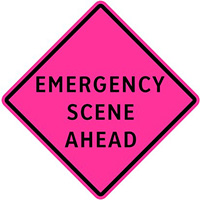
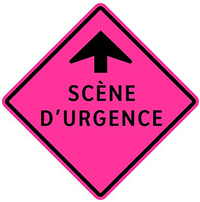
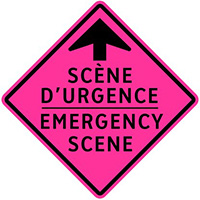
Roadside assistance vehicle operators are authorized to use traffic cones and “Emergency Scene Ahead” signs to create a safe work zone when working on or beside a highway—for example, when towing a broken-down vehicle or boosting a dead battery.
These optional temporary traffic control devices can be used to alert traffic of their presence on the roadway and must be removed once the incident is cleared or replaced by an approved traffic management plan. The signs are available in English, French, and a bilingual version.
 Follow us on X / Twitter
 Receive Road Notifications via email