What is assistive technology? + −
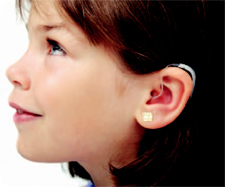
Assistive technology is specialized equipment or devices that can help people with disabilities with their daily activities in:
- communication
- self-care
- mobility
- hearing
- vision
- environmental control
Assistive technology includes items that are purchased, hand-made or customized
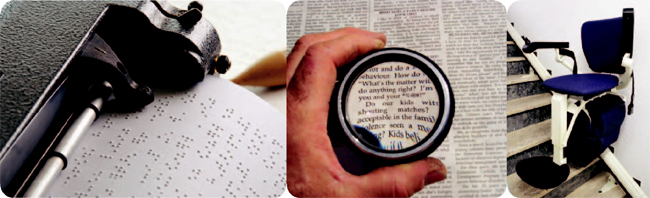
The following chart shows examples of assistive technology
| Type of Assistive Technology | Examples |
|---|---|
| Communication |
|
| Activities of Daily Living/Self-careSelf-care (ex: dressing, bathing, cooking, eating) |
|
| Mobility |
|
| Hearing |
|
| Vision |
|
| Environmental Control |
|
Where can I get information and access to specialized equipment for people with disabilities? + −
Therapists will have information about where you can borrow, rent or buy specialized equipment, as well as programs that can help with the equipment. Occupational therapists, physical therapists, speech-language pathologists and audiologists work in clinics, hospitals, community-based agencies and private practice. They can make an assessment you and identify equipment that can help with daily activities.
Agencies and organizations that serve specific Disability groups also provide information about equipment. These include, but are not limited to:
- Rehabilitation Centre for Children (RCC) www.rccinc.ca/
- Canadian National Institute for the Blind (CNIB) www. cnib.ca/en/ services/products
- Communication Devices Program www.wrha.mb.ca/prog/cdp
- Assistive Technology Products and Services (ATPS) of the Winnipeg Regional Health Authority (WRHA) http://www.hsc.mb.ca/ servicesShopsOther.html#AssistiveTech
- Open Access Resource Centre www.oarc.ca/
- Disability and Health Supports Unit (DHSU) www. gov.mb.ca /fs/dhsu/index.html
- Manitoba Ancillary Health Programs www.gov.mb.ca/health/mhsip/programs.html
Who pays for assistive technology? + −
There are many ways that assistive technology is funded, depending on each person’s situation.
Provincial programs – The Manitoba government offers programs that include funding to rent or purchase specialized equipment. If you are eligible, you may receive funding for, or be eligible to access, equipment, assistive technology or environmental adaptations.
- Children’s disABILITY Services – Children’s disABILITY Services supports families who are raising a child (or children) with developmental or physical disabilities to meet the additional needs they may have. Children’s disABILITY Services may provide funding for equipment to assist with a child’s disability-related needs. For more information, please visit the Disability Health and Support Unit (DHSU) website at www.gov.mb.ca/fs/dhsu/.
- Community Living Disability Services – Community Living disABILITY Services offers a range of day and residential services aimed at providing adults with an intellectual disability greater independence within the community. Depending on the assessed needs of the individual, equipment and environmental adaptations may be available. For more information, please visit the Disability Health and Support Unit (DHSU) website at www.gov.mb.ca/fs/dhsu/.
- Employment and Income Assistance (EIA) – The Employment and Income Assistance Program may provide funding for basic and essential medical equipment and supplies for people who are not covered through home care or any other plan. For more information, please visit the Disability Health and Support Unit (DHSU) website at www.gov.mb.ca/fs/dhsu/ .
- marketAbilitiesProgram – The marketAbilitiesprogram offers services to help eligible adults prepare for, obtain and maintain employment. The program may provide funding for technical aids, devices, or adaptive equipment required to assist in removing a disability-related barrier to training and/or employment. For more information, visit: ww.gov.mb.ca/fs/eia/marketabilities.html
- Manitoba Health, Healthy Living and Seniors – Specific equipment may be included through Ancillary Programs of Manitoba Health, Healthy Living and Seniors. For more information, visit: www.gov.mb.ca/health/mhsip/programs.html
- Regional Health Authorities – Home care services offered in Manitoba through the Regional Health Authorities may provide help with equipment for people living in their home. Your Regional Health Authority is a good source of information about equipment and programs that can help you. For Regional Health Authority contact information, visit: www.gov.mb.ca/health/rha/contact.html.
- Private insurance – You may have an insurance plan through your workplace that covers expenses for items such as hearing aids, glasses, orthotics, prosthetics or other supportive items. Since organizations with group insurance negotiate what will be included in the plan, the items that are covered vary across workplaces and over time.
- Employers – In some situations, employers may buy assistive technology for a person with special needs so their disability doesn’t prevent them from fulfilling a job function. This device would be used in the workplace and owned by the organization. For more information on reasonable accommodations in the workplace, please see Human Rights and Reasonable Accommodations section.
- Community and Non-profit organizations – Some service organizations provide support for equipment purchases, either through direct funding or long-term rentals. You can contact community organizations that may provide funding for assistive technology.
The Disability and Health Supports Unit (DHSU)
The Disability and Health Supports Unit (DHSU) reviews disability and health related supplies, equipment and nutritional and diet supplements for Manitobans enrolled in:
- Employment and Income Assistance
- Children’s disABILITY Services
- Community Living disABILITY Services
The DHSU offers a streamlined, one-stop-shop to help eligible clients access these disability and health-related supports in a consistent, fair and efficient manner. For more information on the DHSU, please visit: www.gov.mb.ca/fs/dhsu/