Services and Programs for Children
Printable PDF version
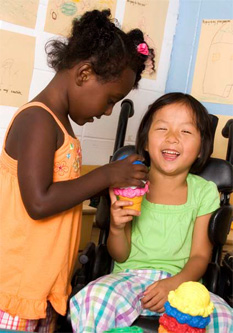
My child has unique needs. Can she attend licensed child care? How will her needs be met? + −
Supports are available to help licensed non-profit child care centres and licensed home providers meet your child’s unique needs. Based on specific eligibility criteria, licensed child care facilities may apply and qualify for:
- financial help for support staff
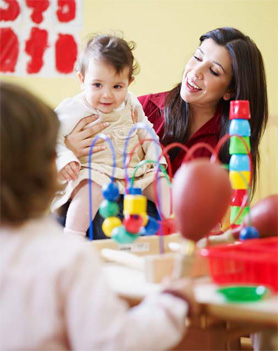
- grants for specialized equipment or adaptations to equipment
- staff training
Child care providers will work with you and other professionals. Together, you will share information to help develop goals for your child. For more information, please see the Guide to the Inclusion Support Program (PDF).
How do we find a licensed child care centre or child care home? + −
Use the Online Child Care Registry to register your child for a space at multiple licensed facilities at one time. When a space at one of the facilities you have selected becomes available, the facility will contact you. You can visit the Online Child Care Registry - For Families.
Please check off the “special requirements” box when you register your child. After adding your child to the Online Child Care Registry, you may also want to contact facilities directly to confirm your child care needs.
What questions should I ask a child care provider? + −
You can find helpful questions to ask a potential child care provider in the document, A Guide to Child Care in Manitoba. The guide contains questions about:
- the daily program
- health, nutrition and safety
- furnishings and equipment
- staff training and staff-to-child ratios
- administrative policies
View the A Guide to Child Care in Manitoba.
How long will I need to wait for licensed child care? + −
The waiting period for a space will depend on the facility and where you live in Manitoba. Some facilities may have spaces available immediately, while others may have a waiting list. It is recommended that you register at more than one facility and consider other areas if waiting lists are long.
What type of funding assistance is available for families with a child enrolled in licensed child care or who have a child attending nursery school? + −
Subsidies for child care
For families that apply and qualify, the province may provide a subsidy for the maximum daily child care fees. Subsidy for child care fees is based on family income. To qualify for a subsidy, you need to be:
- working

- looking for work
- going to school
- have another specific reason
Subsidies for nursery school
A subsidy for families using nursery schools, including those with a stay-at-home parent, is now available. This can help provide a stimulating experience for your child in one of Manitoba’s nearly 200 licensed nursery school programs. Parents do not need to be working or going to school to apply.
You can apply for a child care subsidy and use the Subsidy Eligibility Estimator (SEE) to find out how much you would be eligible for at: www.manitoba.ca/childcare
To speak with someone about subsidies, call the Subsidy Information Services line at:
Winnipeg: 204-945-8195
Toll free: 1-877-587-6224
Subsidies are a type of financial assistance from government. There are subsidies that are available to help families pay for the cost of child care. Payment is made directly to the child care centre on behalf of the family.

I have questions about child care. Who do I contact? + −
You can contact Child Care Information Services at:
Winnipeg: 204-945-0776
Toll free: 1-888-213-4754 or
Email: cdcinfo@gov.mb.ca
You can also visit the website:
I have a concern about my child care licensed centre or home. What do I do? + −
If you have a concern about your child care centre, contact Child Care Information Services at:
Winnipeg: 204-945-0776
Toll free: 1-888-213-4754 or
Email: cdcinfo@gov.mb.ca
A staff member from Manitoba Early Learning and Child Care is available to answer your questions or write down the details of a concern or complaint. The staff will also help to ensure appropriate follow-up. All concerns are investigated by licensing staff.
What should I do if I’m concerned that my child may have a disability or developmental delay? + −
Children develop in the same basic ways and at different rates. If you are worried about your child’s development, visit your family doctor or your child’s doctor and explain your concerns. Your concerns may come from your own observations or from others (such as family members, friends or staff at the child care centre or school). Based on your information and an examination, your doctor may make a referral for an assessment to a health professional.
For more information on how to get an assessment and a diagnosis for your child, visit the Information for Manitobans with Disabilities section, A Young Child’s Assessment and Diagnosis.
What is the Children’s disABILITY Services program? + −
This program , provided through Manitoba Family Services, supports families who are raising a child (or children) with developmental or physical disabilities, to meet the additional needs they may have. Children’s disABILITY Services offers a variety of resources and supports to parents to assist them to care for their children at home in their own communities, where children grow and thrive.
Does my child qualify for for Children’s disABILITY Services? + −
 To be eligible for CDS, children must:
- be under the age of 18
- be living in Manitoba with their birth, adoptive or extended families
- have a medical diagnosis confirming they have one or more of the following conditions:
- intellectual disability
- developmental delay
- autism spectrum disorder
- lifelong physical disability
- a high probability of developmental delay due to a pre-existing condition
What services are provided by the Children’s disABILITY Services program? + −
The CDS program offers a wide range of services for children with disabilities and their families. The specific services that each child and their family receive are based on individual assessment and available financial and human resources. Services may include:
Service |
Description |
Preschool |
Children |
Youth |
Child Development |
The Child Development Program provides early intervention services for children who have a developmental delay or disability. This service helps children develop in five areas: self-help, motor skills, socialization, communication and cognition. Child Development staff work with parents to identify their child’s strengths and goals. Staff teach parents and caregivers ways to help the child develop and learn new skills. |
● |
● |
|
Therapy |
Therapies that may be available are occupational therapy, physiotherapy, speech and language therapy and audiology. Children who need therapy services will be referred to their regional central intake for the Children’s Therapy Initiative (CTI). Please see further information on therapy for children in this section. |
● |
● |
● |
Autism Services – Autism Outreach |
This program teaches parents and caregivers autism intervention methods that are personalized and flexible. Autism specialists work closely with child-development staff to deliver the services. |
● |
● |
● |
Autism Services - Applied Behavioural |
Programming based on the principles of ABA is available for children diagnosed with autism spectrum disorder. Programs are personalized and use behavioural strategies to teach skills across a number of areas. |
● |
● |
● |
Summer Skills |
Children’s disABILITY Services can help school-age children maintain their skills during the summer months. This is done by providing supports children need to access programs and activities that promote what they have learned during the school year. |
|
● |
● |
Behavioural Services |
Behavioural specialists may assess a child’s challenging behaviours, and together with the family, develop a plan that addresses the child’s needs. |
● |
● |
● |
After School Care for |
After school care may be available for adolescents who can no longer access child care, but still need to be looked after and supervised outside school hours, while their parents are at work. |
|
● |
●
|
Respite |
Respite is a break from the very unique demands of caring for a child with disabilities. Respite can be provided in or outside the child’s home for parents who need a short-term break. The amount and type of respite families receive is based on the circumstances of each family. For children who have lifelong, complex medical needs, respite can be provided by a registered nurse through the local regional health authority. |
● |
● |
● |
Supplies,Equipment and Home/Vehicle |
Children’s disABILITY Services may provide funding for certain supplies, equipment and home or van modifications at a basic level. These supports are provided through the Disability and Health Supports Unit. For more information on what’s available, visit www.manitoba.ca/fs/dhsu . |
● |
● |
● |
Transportation Costs to and from Medical |
Assistance may be available for families who need financial support to cover the costs of transportation to and from medical appointment and specialized services for their child with disabilities. This support is mainly for families in rural and northern regions. |
● |
● |
● |
How do I contact the Children’s disABILITY Services Program? + −
Call your regional or community area office. The locations and phone numbers can be found at: www.gov.mb.ca/fs/cds/index.html
When calling the regional or community area office, you will be asked for basic information, including your name, address and telephone number. You will also be asked for information about your child, including diagnostic information if known. You will be asked what type of help you are looking for. This information will be used to begin the process of determining eligibility for CDS. A CDS staff person will contact you and advise you of next steps in the process.
What if my child already has a diagnosis and I have the assessment information? + −
Check with the professional who made the diagnosis to see if a referral to CDS has been made. If it has, call your regional or community area office to check on the status of your child’s referral. If a referral has not occurred, call your regional or community area office to get a referral. You can find contact information for your regional or community area office at www.gov.mb.ca/fs/cds/locations.html
I recently moved, or I am thinking of moving, to Manitoba. Who do I call and what information will I need? + −
Call the regional or community area that you have moved to or plan to move to. You will be asked for some basic information including your name, address and telephone number. You may also be asked to complete a referral form. As part of the referral process, you may be asked to provide documentation from a qualified professional about your child’s diagnosis. If you have a school age child, the Transitioning Through School section will provide information on creating a smooth transition to a new school.
What other services and supports may be available for my child with disabilities? + −
- Canadian National Institute for the Blind (CNIB) www.cnib.ca/en/mb-sk/ Pages/ default.aspx
- Central Speech and Hearing Clinic www.centralspeech.ca
- Family Dynamics (formerly called the Family Centre of Winnipeg) www. familydynamics.ca /about/
- Manitoba Adolescent Treatment Centre (MATC) www.matc.ca/ index.html
- Regional Health Authorities in Manitoba www.gov.mb.ca/health/rha/contact.html
- Rehabilitation Centre for Children www.rccinc.ca/programs-services
- Society for Manitobans with Disabilities www.smd.mb.ca/childrens_services.aspx
- Specialized Services for Children and Youth (SSCY) www.sscy.ca
My child has been assessed and now needs therapy. Who do I contact to get service? + −
 Children’s Therapy Initiative
The Children’s Therapy Initiative provides service to children from birth to 21 years of age who require audiology, occupational therapy, physiotherapy and/or speech-language pathology services.
Children’s Therapy Initiative provides co-ordinated, regionally based services that allow children to get the therapy services they need in their own communities.
Service for Preschool Aged Children
In many areas of the province, therapy services for preschool aged children are co-ordinated through a central intake. Your child may be referred for therapy by a specialist or your family can contact the program directly.
Referrals are reviewed to determine if therapy services are needed. Families may be asked to give additional information before a therapist is assigned.
Some preschool age children may receive therapy at home or in a child care setting.
For more information about preschool therapy in your area, including contact information to each regional Children’s Therapy Initiative, please visit: www.sscy.ca/childrens-therapy-initiative
School Aged Children and Youth
School aged children and youth who require therapy may receive these services through their school division. Parents should contact their local school for more information on therapy services. The link below provides a listing of all schools in Manitoba and their contact information: www.edu.gov.mb.ca/k12/schools/ 2015_mb_schools_book.pdf
Private Therapy Services
You may have access to therapy services through individual or group insurance. For example, many workplaces offer insurance plans for employees to purchase therapy services. Although each workplace has a different plan, some therapy services may be included.
What areas do different types of therapists support? + −
Therapies for children include physiotherapy, occupational therapy, speech-language therapy and audiology. The following chart shows some of the areas that are addressed by audiologists, occupational therapists, physiotherapists and speech- language pathologists.
Audiologist
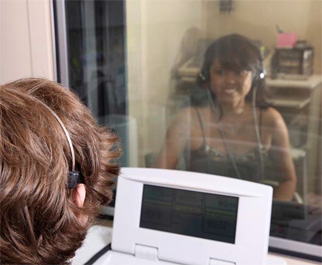 hearing
- fitting hearing aids and other devices
- understanding hearing loss
- auditory processing
Speech-Language Pathologists
- speech sounds
- using and understanding language
- social language skills
- voice quality
- oral motor control
- stuttering
Physiotherapists
- motor skills (rolling, sitting, crawling, walking and running)
- joint motion and muscle strength
- balance and coordination
- moving with equipment (bikes, walkers)
- sports and activities
Occupational Therapists
- fine motor skills
- feeding and oral motor skills
- sensory processing
- cognitive/perceptual skills
- social skills
- self-care skills
- play skills
- vision
What types of mental health services are available in Manitoba? + −
 Manitoba has a range of mental health services for children and adolescents provided in community, hospital and school settings.
Regional Health Authorities deliver the majority of child and adolescent mental health services in community and hospital settings. Services are typically provided by multi-disciplinary teams, in partnership with families. Team members may include child and adolescent psychiatrists, community mental health workers, clinical psychologists, nurses and social workers and other specialized professionals.
Check with your Regional Health Authority to find out which services are available in your area. For information on Telehealth, community-based services, hospital services and mental health contacts for each Regional Health Authority, please visit: www.gov.mb.ca/health/mh/region.html
A multi-disciplinary team is a group of professionals with different areas of expertise who come together to provide treatment and care for a person with mental health issues.
Community Services
Child/Adolescent Community Mental Health Workers
- assessment and treatment planning in collaboration with family
- consultation services
- education for clients, family members, care providers and the community
- crisis response
- goal oriented treatment
Rural and Northern Telehealth Service
Psychiatrists, based in Winnipeg, are available to provide psychiatric assessment and consultation services to rural and northern Regional Health Authorities.
Specialized Services
Some RHAs may provide a variety of specialized programs and services. These may include:
- Early Psychosis Prevention Programs: provide assessment, identification and treatment supports for people between the ages of 15 to 35 years who may be experiencing or recovering from a first episode of psychosis.
- Youth Forensic Services: provides psychiatric and psychological assessments and brief treatment services for youth involved with the Youth Justice System.
Other Community Based Services
- Self Help and Family Supports: provided through support networks of people, many of whom are either living with a mental illness or have a family member with a mental illness. Self help activities include mutual support, public education, advocacy and recovery-oriented services that promote the needs and priorities of people with mental health problems and illnesses.
- The Mental Health Education Resource Centre of Manitoba: a lending library providing information to service providers, people with mental health problems, families, teachers and the general public.
Hospital Services
Child and Adolescent Psychiatry – Health Sciences Centre: provides comprehensive multi-disciplinary assessment and crisis stabilization for children and adolescents under the age of 18 from the province of Manitoba and parts of Nunavut in accordance with the Mental Health Act of Manitoba.
School Based Services
School divisions across Manitoba provide a variety of mental health related services and programming. Services may be provided by school psychologists, clinical psychologists, guidance counsellors, classroom teachers and other specialized professionals. Check with your child’s school to find out what services are available in your school. The link below provides a listing of all schools in Manitoba and their contact information: www.edu.gov.mb.ca/k12/schools/ 2015_mb_schools_book.pdf
Stresshacks
This on-line resource provides information about general mental health, tools to manage stress, links, resources and an interactive map of Manitoba that locates resources in your area. This website is designed for youth, parents and professionals/educators and can be viewed at: www.stresshacks.ca
Who is eligible for child and adolescent mental health services? + −
Mental health services are available for:
- children and adolescents with mental health problems as well as symptoms of mental illness
- parents, families or caregivers seeking consultation and support services
How are mental health services accessed? + −
Mental health services can be accessed through your family doctor or other healthcare professional or by calling directly to the mental health services of your local Regional Health Authority. For a list of the Regional Health Authorities in Manitoba and contact information for their mental health programs, visit: www.gov.mb.ca/ health/mh/ region.html
Your community may have other types of mental health supports available to children and youth. You may also have access to private services through your workplace Employment Assistance Program - or private insurance (such as Blue Cross).
In Winnipeg
 The centralized intake for the Child and Adolescent Mental Health Program provides a single point of entry in Winnipeg for children and adolescents experiencing emotional or behavioural concerns as well as symptoms of mental illness.
The centralized intake phone number is 204-958-9660 Monday to Friday 9 a.m. to 5 p.m. Parents, caregivers, doctors and/or counsellors can make referrals. Self-referrals can also be made.
In Winnipeg, the Youth Emergency Crisis Stabilization System is available at 204-949-4777 or toll free at 1-888-383-2776.
Rural and Northern Regional Health Authorities
For a list of the Regional Health Authorities in Manitoba and the intake numbers for their mental health programs see: http://www.gov.mb.ca/health/mh/region.html
Stresshacks
This on-line resource includes an interactive map of Manitoba that locates resources in your area. It can be viewed at: www.stresshacks.ca
Crisis Services (Outside of Winnipeg)
Child and Adolescent Treatment Centre – Crisis Stabilization Unit (CSU) provides 24-hour care to children and adolescents in crisis from Brandon, Assiniboine, Central and Parkland RHAs. Treatment focuses on stopping the crisis and returning the client to the community. Services provided include: multi-disciplinary team assessments, individual treatment, group and family therapy, community transition and consultation with community resources.
If you are in crisis or cannot wait for an appointment, you can call your local crisis line. For a listing of crisis services and contact information please visit: www.gov.mb.ca/health/mh/ region.html or refer to your local phone directory.
What is home care? What services and supports can I access from home care? + −
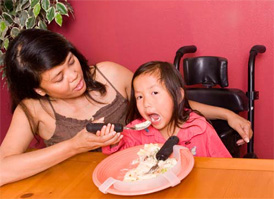
Home care services within Manitoba are provided through the Regional Health Authorities (RHA’s). It is a community-based program that provides home support to any eligible Manitoban, regardless of age, who requires health services or assistance with daily living activities. Services may include:
- personal care assistance (for example, bathing, dressing, toileting)
- home support
- health care (nursing, therapy)
- in-home relief to caregivers
- respite care services in alternative settings
- some supplies and equipment
- volunteer services
- access to alternate care settings
- assessment and facilitation of alternate care placement
Home care services may be provided for your child in your home, educational setting or workplace, based on assessed needs. Under special agreement with the RHA, home care may provide services at an alternate site.
Families may have the opportunity to manage their child’s own home care services through family-managed care options.
For a general overview of Manitoba’s Home Care Program, see: www.gov.mb.ca/health/homecare/guide.pdf
Home care services are accessed through your Regional Health Authority. Not all services are available in all regions. Contact your Regional Health Authority for detailed information about home care services, eligibility, or to arrange for a home care assessment with a case co-ordinator. For Regional Health Authority contact information, see: www.gov.mb.ca/health/rha/contact.html
Who is eligible for home care? + −
To be eligible for home care, your child must be a Manitoba resident and registered with Manitoba Health. Eligibility is based on an assessment of your child’s individual needs. To find out if your child is eligible for home care services, a case co-ordinator will meet with you and complete the assessment. Case co-ordinators are health professionals who are qualified to assess your child’s home care needs. When assessing your child’s needs, the case co-ordinator will consider the supports that you already have in place as well as other community resources available to you and your child.
There is an appeal process if you disagree with the final decision about eligibility for home care, type of service or level of service. Contact the Manitoba Health Appeal Board at:
Winnipeg: 204-945-5408
Toll free: 1-866-744-3257
Email: appeals@gov.mb.ca
Are there different levels of service that people receive? + −
Yes, there are different levels of home care service. The level of service provided is based on the assessment process and the mutually agreed upon individual care plan developed with you and the case co-ordinator for your child.
Where can I learn more about a specific disability? + −
There are many reliable informational sources for specific disabilities.
- Consult your doctor: The diagnosing physician can provide information on the disability and refer you to other information sources.
- Online resources: You can search on the internet for information on a specific disability. Some helpful websites may include:
- www.webmd.com/a-to-z-guides/health-topics/ak-ao.htm
- www.mayoclinic.org/diseases-conditions
- www. disabled-world.com/
- www.rarediseases.org/
Note: It is important to check for reliability when researching online.
- Local associations: There may be associations in your community that provide information for people with disabilities.