A Young Child's Assessment and Diagnosis
As a parent watching your young child grow, questions may come up about whether your child's development is typical of children the same age. You may wonder about:
- signs that indicate a developmental delay or disability
- what you can do if you have a concern
- what will happen after a diagnosis
This section will guide you through this process.

The skills that children gain at various stages are called developmental milestones. Milestones occur at various times and within the following areas: social, emotional, language, movement and intellectual. A child may have a developmental delay if skills are not reached within the same time range as other children of the same age. The following websites contain milestones from birth to school age:
Your concerns may come from your own observations or from others (such as family members, friends or staff at the childcare centre or school). If your child has not developed the skills described in the developmental milestones, see your child's doctor. Before the appointment, write a list of the specific skills your child has and has not reached. Preparation can go a long way to making sure that your child's doctor has essential information. The developmental milestones list can help gather and communicate information for the appointment.
There are a number of things you can do to ensure you child's doctor receives important information.
- Prepare for the appointment – Developmental milestones are recognized across Canada as the standard measure for a child's development. By preparing for the appointment and presenting the doctor with specific milestones your child has and has not reached, you will be able to show why an assessment would be important. It is helpful to take a written list of your concerns and the questions you have for your doctor.
 Tell your doctor about your concerns at the beginning of the appointment – If you list all of your observations and concerns about your child's development at the beginning of the appointment, your doctor can decide which items are a priority, include your concerns in the assessment and make sure that there is enough time to ask you questions.
Develop a good partnership – You can work together with your doctor and develop a good partnership if you:
- Share information – Share all relevant information about your child with your doctor. An assessment can be more complete if you tell the doctor about your child's development, daily activities, symptoms and behaviours.
- Listen actively – Give your full attention to the questions that your doctor is asking and the information that he or she is providing. Keep distractions to a minimum during the appointment, such as cell phones and texting devices. It may be helpful to bring a friend or family member to the appointment. This person can write down important information for you or help care for your child during the appointment.
- Ask for clarification – If you do not understand the questions your doctor is asking or the information being given, ask him or her to explain it more clearly for you. If you are unsure about anything the doctor explains, such as a diagnosis, treatment options, activities for home, and referrals, ask questions or let your doctor know that you are not understanding the information.
- Write down important information – It can be difficult to receive a lot of information at once. Taking notes during the meeting can help you identify any information you are missing and remember the information at a later time. You may bring someone with you to take notes for you.
- Ask about next steps – If your doctor has not mentioned anything about follow-up appointments, referrals to specialists, treatment options or other assessments, be sure to ask.
 Based on your information and the examination, your family doctor, pediatrician or nurse practioner may make a referral for an assessment to a health professional, such as:
- pediatrician or other health professional
- physiotherapist, occupational therapist, speech language pathologist or audiologist
- child/adolescent mental health
- the Child Development Clinic
- other specialists, clinics, or resources
If an assessment shows that your child has a developmental delay, it is important to begin early intervention services. Since human learning is most rapid in early years, it is a good time to introduce developmental activities for children. If you check with your family doctor or pediatrician about concerns you have with your child's development, intervention services can begin early.

If you still have concerns, your family can consider the following options:
- Get a second opinion – If you have not received a referral for further assessment and believe that your child may have a developmental delay, you can get a second opinion from another physician or nurse practioner.
- Talk with a professional who is already involved with your child – If your child is involved with another professional (for example a physiotherapist, occupational therapist or speech-language pathologist), you can let them know about your concerns. They can share their assessment with your child's doctor, pediatrician or nurse practioner, who may refer you to the Child Development Clinic.
- Connect with other professionals - If there is no other professional involved with your child, you can contact the Children’s Therapy Initiative directly to have your child seen by a physical therapist,
occupational therapist, speech language pathologist and/or audiologist.
The Child Development Clinic (CDC) provides assessment and referral support for preschool aged children who may have developmental concerns. When families visit CDC, they may see one or several staff who specialize in child development – a developmental pediatrician, social worker, clinical psychologist, or other early childhood developmental specialist and/or therapists.
The CDC is located in Winnipeg’s Children’s Hospital at the Health Sciences Centre. For more information, contact the CDC at:
Child Development Clinic
1155 Notre Dame Ave.
Winnipeg, Manitoba R3E 3G1
Phone: 204-258-6628
The CDC is a provincial service. Rural clinics are offered in designated areas of the province on a regular basis.
A developmental assessment is an evaluation of a child’s development in various areas – motor, language, cognitive, social and emotional. It can inform specialists about the types of treatments, community resources and/or services that will support children in their ongoing development. Depending on the child and family’s needs, there may be one or more specialists involved in an assessment, including:
- developmental pediatricians
- clinical psychologists
- social worker
- therapists (physiotherapists, occupational therapists)
- others (such as child care facilities)
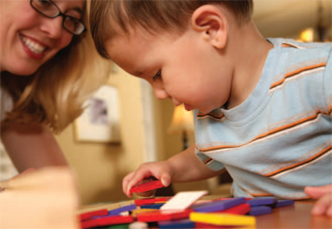
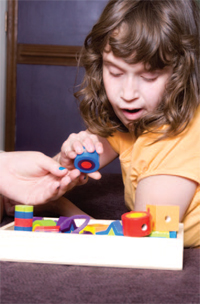
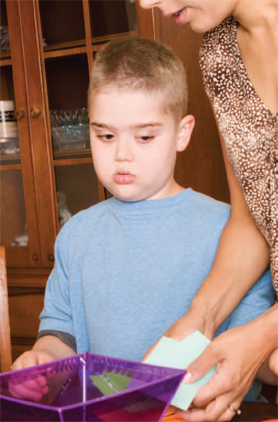
The specialist may give your child specific tasks to learn more about his or her strengths and weaknesses. Depending on their age and developmental concerns, activities may include block building, puzzles, language tasks and some physical activities and observation of your child at play.
Your main role is to provide information. Since you know your child best, the information that you share is an important part of a thorough assessment. By observing your child’s participation in the assessment activities, you can tell the specialists if what they are seeing is typical of your child. During the appointment, the specialist may ask about your child’s everyday activities, such as speaking, toileting, eating, behaviour, motor skills, sleeping and play.
 The specialist performing the assessment will inform you of any items or information to bring to the appointment. For some assessments, you may be asked to complete a questionnaire on family and medical history. The type of information that you may be asked about includes:
- Your Concerns – The specialists may ask about your main concerns about your child's development, when you first noticed any problems and how any problems have progressed
- Medical Information – This includes information about:
- family medical history (illnesses or disabilities that relatives may have)
- pregnancy and delivery (difficulties or complications with pregnancy and delivery)
- your child's health history (accidents or illnesses)
- Daily Living Activities –
- sleeping – includes sleep patterns and problems
- eating – includes eating patterns and what your child eats
- play – how your child interacts with other children and plays with toys
- Communication – how your child communicates (ex. talking, gestures), how his or her talking and reading are progressing
- Physical Movement – includes movements such as crawling, standing up, walking, picking up objects, drawing
- Social Skills – how your child relates to others
- Behaviour – how your child responds in different situations and expresses his or her feelings
With your consent, other professionals who work with your child (such as from childcare centres, preschools and schools) may also be asked to respond to questionnaires. Having information from you and others who work with your child can provide the specialists with a more complete picture of your child's development.

The specialist may meet with you immediately after the appointment or schedule an appointment for a later date. At this time, you will have an opportunity to have the results explained and ask questions. The specialist may provide recommendations for:
- chid development activities you can do at home
- follow-up assessments
- helpful services
- connections with community resources
It is sometimes difficult to receive all of the information at once and know what to ask. You may find it helpful to prepare a list of questions before the meeting and write down the specialist's answers during the meeting.
Possible things to ask about include:
- Did the assessment provide a diagnosis for my child?
- What type of information did the assessment provide and if further assessment is required?
- What are areas that my child needs help with?
- What are my child's areas of strength?
- Are there activities that I can do with my child to promote development?
- Can you recommend or refer my child for any services or programs?
- Can you recommend any resources (books, websites, magazines, videos)?

You may receive a copy of the assessment or summary of the results. If you do not receive one, ask the doctor or professional who conducted the assessment for a copy of the report.
It is helpful to keep all assessment information and reports filed or in a binder. Agencies may require that you provide this information before services for your child can begin.
To learn more about access to your health information, visit the following website on access to information in Manitoba:
If I am new to Manitoba, will an assessment from out of province or country be recognized or will my child need to be reassessed? + −
Your child's records will be reviewed to see if further assessments are needed. When reviewing assessments from other provinces or countries, the specialists will consider several factors, such as how long ago the assessment was completed, whether the assessment tools are the same and whether it answers all of the questions they have about your child's development. All of the factors will be considered when deciding if a reassessment is necessary.

If the assessment has shown that your child could benefit from services, the doctor or specialist will make recommendations and referrals with your written consent. The specialist can connect you with resources and services that will help your child.
There may be a waiting time to receive some services. Where you live may limit the services that are available. Some specialized services may not be available in all regions of the province and you may need to travel to access some services.
The doctor will not share any information unless you give your written consent. However, there are some exceptions. For example, a specialist may forward information gathered from an assessment to a professional who is already providing health care to your child, such as your family doctor. If you ask the specialist not to disclose any of your child's information to another professional, and the specialist is certain that your child's health will not be affected, the specialist must not disclose the information.
For more information on The Manitoba's Personal Health Information Act, please visit the following website: http://www.gov.mb.ca/health/phia/
Each child's development is unique and there are many factors that contribute to how and when development happens. Early intervention can sometimes help your child meet or come close to the developmental milestones for his or her age group. It may also identify key areas for his or her team to concentrate on present and future programming.

The Family Doctor Connection line through Manitoba Health provides a listing of doctors in their community who are accepting new patients.
To find a doctor in your area, call:
Winnipeg: 204-786-7111
Toll free: 1-866-690-8260
TTY/TDD: 204-774-8618
Manitoba Relay Service 1-800-855-0511
For more information on health services in Manitoba and how to access these services, visit Health, Seniors and Active Living .